
Insights · Impact Marketing
What is Impact-Driven Marketing? Aligning Business Growth with Meaningful Change

By Maddy Kulkarni · Founder, Citizen Marketing Group
What is impact-driven marketing?
Impact-driven marketing is an approach that aligns business growth with meaningful social or environmental outcomes.
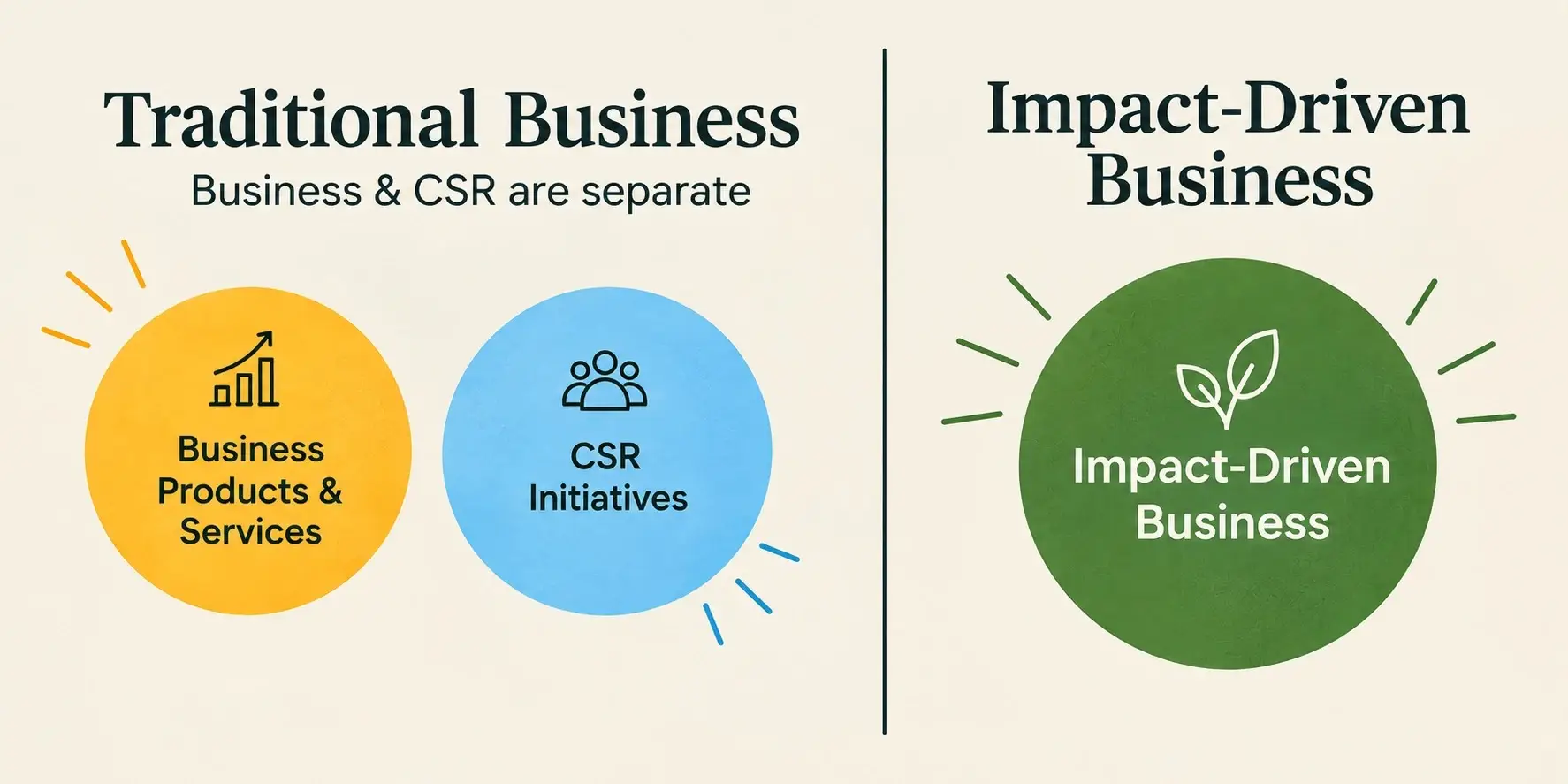
Instead of treating impact as a separate initiative—such as corporate social responsibility (CSR) or philanthropy—impact-driven marketing integrates it directly into a company’s core strategy.
This means marketing doesn’t just promote a product or service. It communicates:
- what the organization stands for
- the change it is creating
- and why that matters to its audience
Why traditional marketing approaches fall short
Traditional marketing often focuses on:
- brand awareness
- lead generation
- short-term campaign performance
While these are important, they can miss a critical opportunity:
Connecting marketing to something deeper and more meaningful.
Today’s audiences—whether customers, donors, or partners—are increasingly asking:
- What does this organization stand for?
- What impact is it creating?
- Why should I trust it?
Without clear answers, even strong marketing efforts can feel transactional and forgettable.
Impact-driven marketing vs CSR: what’s the difference?
Corporate social responsibility initiatives are often separate from the business. Impact-driven marketing is integrated into it.
CSR
Impact-driven marketing
Run independently from core operations
Embedded into the business model
Focused on donations or community programs
Built into the value proposition
Not directly tied to growth strategy
Woven into the messaging and positioning
“We donate to this cause”
“This is how our business creates meaningful change”
Why impact-driven marketing drives growth
Impact-driven marketing is not just about values—it’s a growth strategy.
Builds stronger trust
Audiences are more likely to engage with organizations that clearly communicate their purpose and impact.
Differentiates in competitive markets
In crowded industries, impact can be a powerful differentiator—especially when it’s authentic and embedded in the business.
Strengthens customer and donor relationships
When people connect with your mission, they are more likely to stay engaged, become repeat supporters, and advocate for your brand.
Aligns internal teams and external messaging
A clear impact narrative helps unify marketing, sales, and leadership—leading to more consistent and effective communication.
What impact-driven marketing looks like in practice
Impact-driven marketing is not about adding more campaigns.
It’s about changing how marketing is approached.
This includes:
- Clearly defining the change your organization is creating
- Aligning messaging across all stakeholders
- Connecting marketing efforts to measurable outcomes
- Ensuring consistency across channels and touchpoints
In practice, this often requires a structured approach that connects strategy, execution, and outcomes.
One example is the Impact Growth System™, which aligns marketing efforts with both business goals and measurable impact.
→ Learn more about the Impact Growth System™
How to implement impact-driven marketing
Organizations looking to adopt this approach can start with a few key steps:
Step
What it involves
1. Define your “why”
What is the core purpose of your organization? What change are you trying to create?
2. Identify your key stakeholders
Who are you trying to reach—customers, donors, partners, communities? Each group may require different messaging.
3. Clarify your value proposition
How does your work create value—both commercially and socially?
4. Align strategy before execution
Before launching campaigns, ensure your positioning is clear, your messaging is consistent, and your goals are defined.
5. Measure what matters
Focus on outcomes, not just activity: revenue or pipeline, donor engagement, and long-term impact.
Who should use impact-driven marketing?
Impact-driven marketing is especially valuable for:
B2B and growth-stage companies
Nonprofits and mission-driven organizations
Differentiate in complex markets
Increase awareness and funding
Align marketing with revenue goals
Communicate impact effectively
Communicate value more clearly
Engage multiple stakeholders
In both cases, the goal is the same:
Align growth with meaningful outcomes.
When to bring in strategic support
For many organizations, implementing impact-driven marketing requires a shift in how marketing is structured and led.
This is often the point where strategic leadership becomes critical.
A Fractional CMO can help:
- define strategy
- align teams
- guide execution
- ensure marketing efforts are connected to both growth and impact
→ Explore our Fractional CMO services
Final thoughts
Impact-driven marketing represents a shift from:
marketing as promotion → marketing as purpose-driven growth
When done well, it creates:
- stronger relationships
- clearer messaging
- more sustainable results
Most importantly, it ensures that marketing is not just generating attention—but contributing to meaningful change.
About the author
Maddy Kulkarni is the founder of Citizen Marketing Group. She spent 13 years at PepsiCo, ultimately leading global sustainability and social impact strategy, and is a TEDx speaker and author of Social Impact Marketing: The Essential Guide for Changemakers.
Align growth and impact
The first step is clarity
If you’re looking to align your marketing with both growth and impact, the first step is clarity.